Weather Alerts for Montana
1. Blizzard Warning for: Central and Southern Valley; McCone
2. Blizzard Warning for: Northern Valley
3. High Wind Warning for: Central and Southeast Phillips; Central and Southern Valley; Petroleum; Garfield; Northern Phillips; Southwest Phillips; Northern Valley
4. High Wind Warning for: Daniels; Sheridan; Western Roosevelt; McCone; Richland; Dawson; Prairie; Wibaux; Eastern Roosevelt
5. High Wind Warning for: Eastern Toole and Liberty; Hill County; Northern Blaine County; Western and Central Chouteau County; Bears Paw Mountains and Southern Blaine; Fergus County below 4500ft
6. Winter Storm Warning for: Absaroka/Beartooth Mountains
7. Winter Storm Warning for: Crazy Mountains
8. Winter Storm Warning for: Gallatin and Madison County Mountains and Centennial Mountains
9. Winter Storm Warning for: Judith Basin County and Judith Gap
10. Winter Storm Warning for: Little Belt and Highwood Mountains
11. Winter Weather Advisory for: Bears Paw Mountains and Southern Blaine; Fergus County below 4500ft; Snowy and Judith Mountains
12. Winter Weather Advisory for: Big Belt, Bridger and Castle Mountains
13. Winter Weather Advisory for: Bitterroot/Sapphire Mountains
14. Winter Weather Advisory for: Butte/Blackfoot Region
15. Winter Weather Advisory for: Canyon Ferry Area; Missouri Headwaters; Madison River Valley; Gallatin Valley; Beaverhead and Western Madison below 6000ft
16. Winter Weather Advisory for: Cascade County below 5000ft
17. Winter Weather Advisory for: Central and Southeast Phillips; Western Roosevelt; Garfield; Northern Phillips
18. Winter Weather Advisory for: Daniels
19. Winter Weather Advisory for: East Glacier Park Region; Northern High Plains
20. Winter Weather Advisory for: Potomac/Seeley Lake Region
21. Winter Weather Advisory for: Red Lodge Foothills; Beartooth Foothills
22. Winter Weather Advisory for: Southern Rocky Mountain Front; Upper Blackfoot and MacDonald Pass; Gates of the Mountains; Helena Valley; Elkhorn and Boulder Mountains; Northwest Beaverhead County; Ruby Mountains and Southern Beaverhead Mountains
23. Winter Weather Advisory for: West Glacier Region
Want more detail? Get the Complete 7 Day and Night Detailed Forecast!
Current U.S. National Radar--Current
The Current National Weather Radar is shown below with a UTC Time (subtract 5 hours from UTC to get Eastern Time).

National Weather Forecast--Current
The Current National Weather Forecast and National Weather Map are shown below.

National Weather Forecast for Tomorrow
Tomorrow National Weather Forecast and Tomorrow National Weather Map are show below.

North America Water Vapor (Moisture)
This map shows recent moisture content over North America. Bright and colored areas show high moisture (ie, clouds); brown indicates very little moisture present; black indicates no moisture.

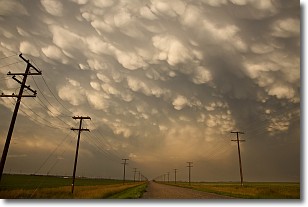
Weather Topic: What are Mammatus Clouds?
Home - Education - Cloud Types - Mammatus Clouds
 Next Topic: Nimbostratus Clouds
A mammatus cloud is a cloud with a unique feature which resembles
a web of pouches hanging along the base of the cloud.
In the United States, mammatus clouds tend to form in the warmer months, commonly
in the Midwest and eastern regions.
While they usually form at the bottom of a cumulonimbis cloud, they can also form
under altostratus, altocumulus, stratocumulus, and cirrus clouds. Mammatus clouds
warn that severe weather is close.
Next Topic: Nimbostratus Clouds
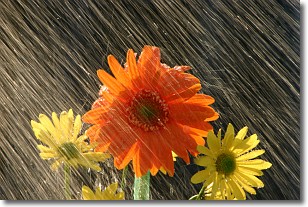
Weather Topic: What is Precipitation?
Home - Education - Precipitation - Precipitation
 Next Topic: Rain
Precipitation can refer to many different forms of water that
may fall from clouds. Precipitation occurs after a cloud has become saturated to
the point where its water particles are more dense than the air below the cloud.
In most cases, precipitation will reach the ground, but it is not uncommon for
precipitation to evaporate before it reaches the earth's surface.
When precipitation evaporates before it contacts the ground it is called Virga.
Graupel, hail, sleet, rain, drizzle, and snow are forms of precipitation, but fog
and mist are not considered precipitation because the water vapor which
constitutes them isn't dense enough to fall to the ground.
Next Topic: Rain
Current conditions powered by WeatherAPI.com